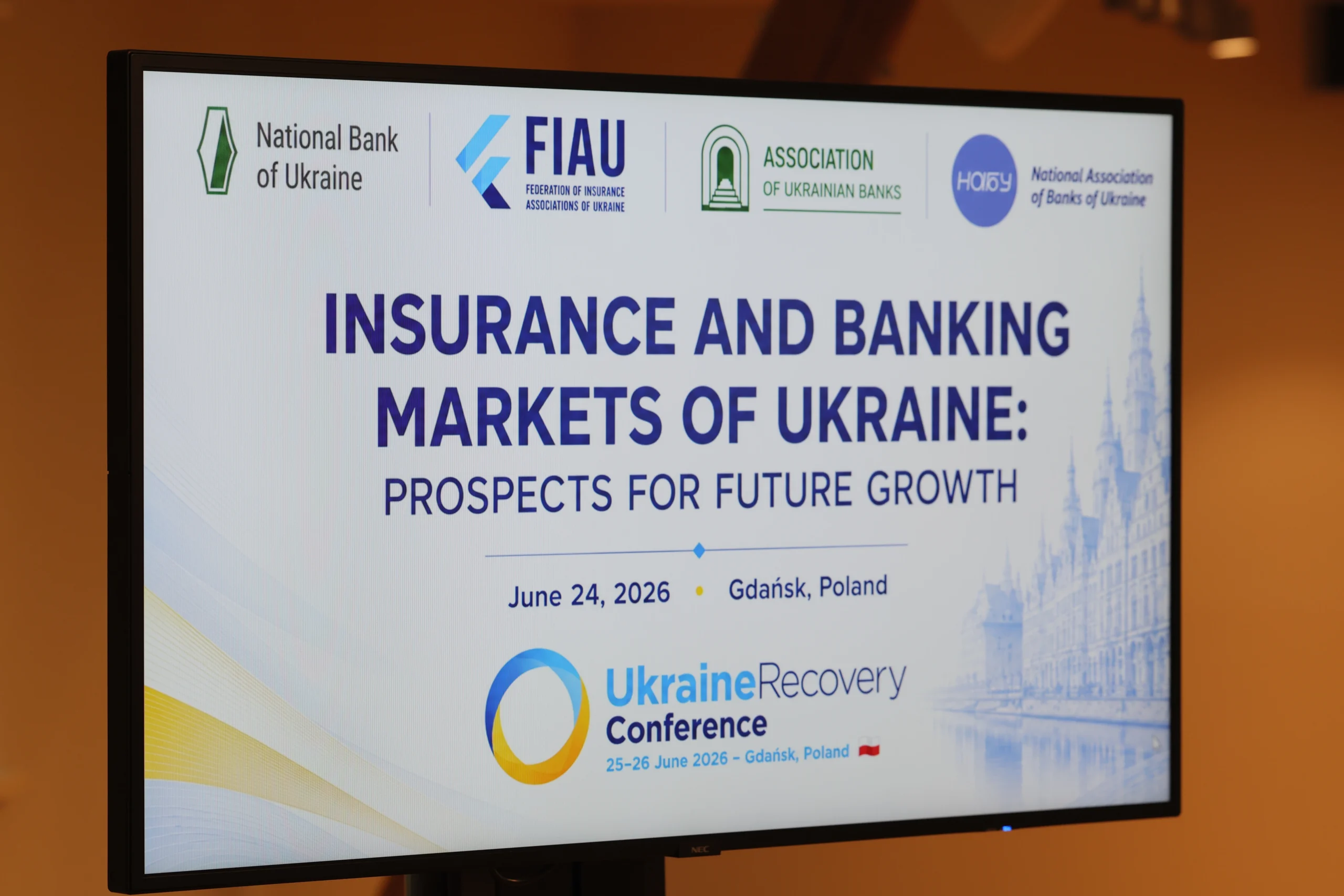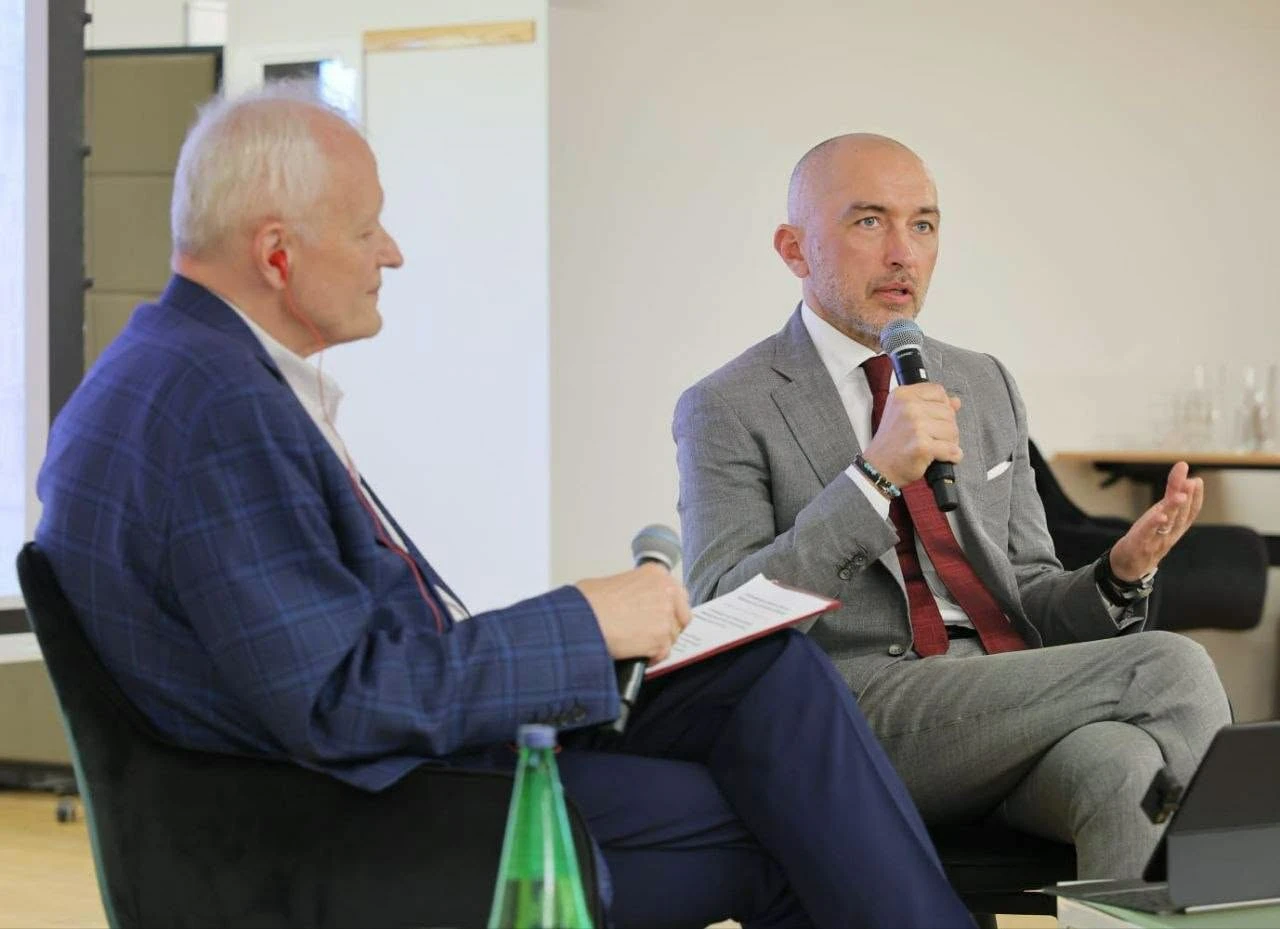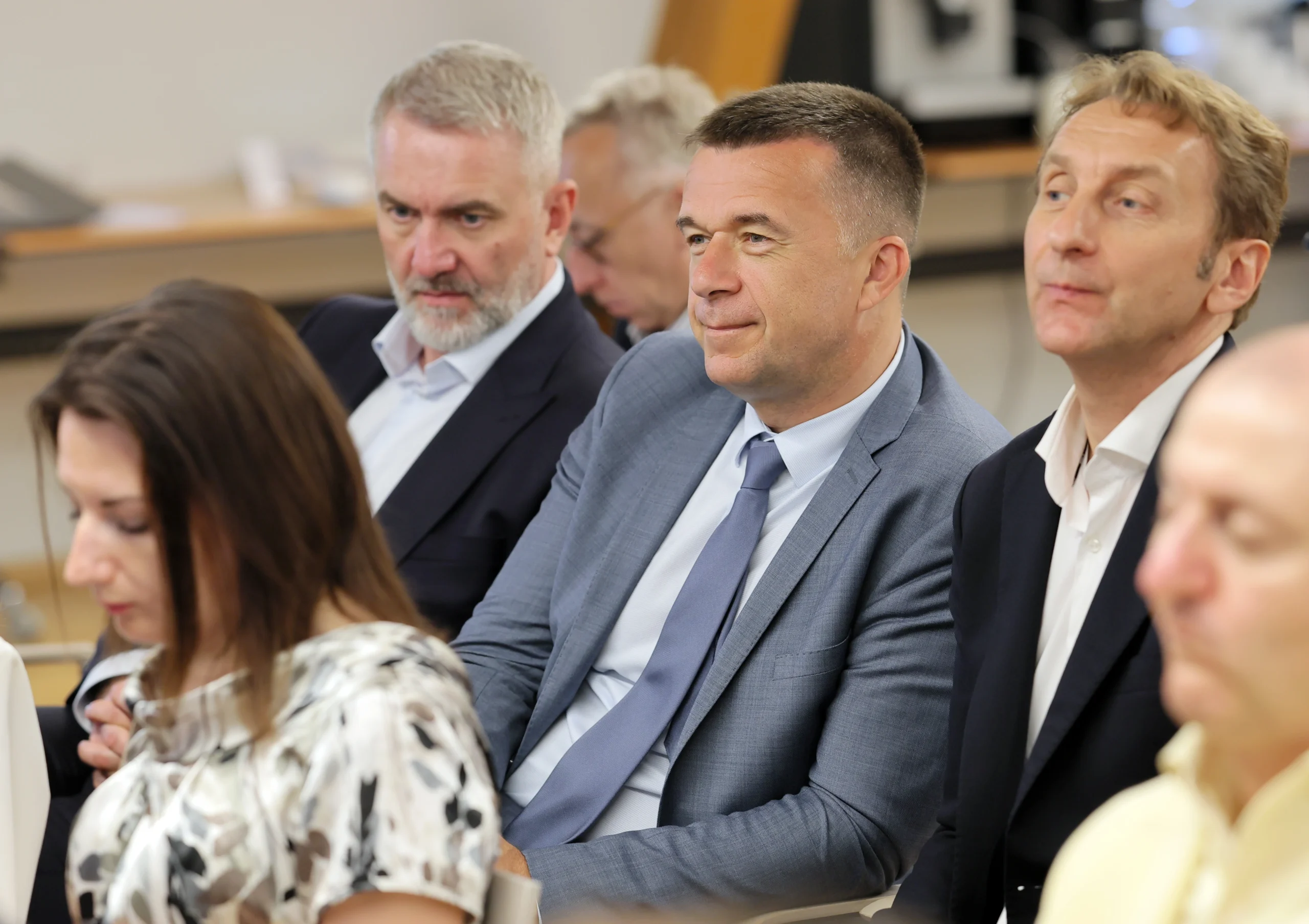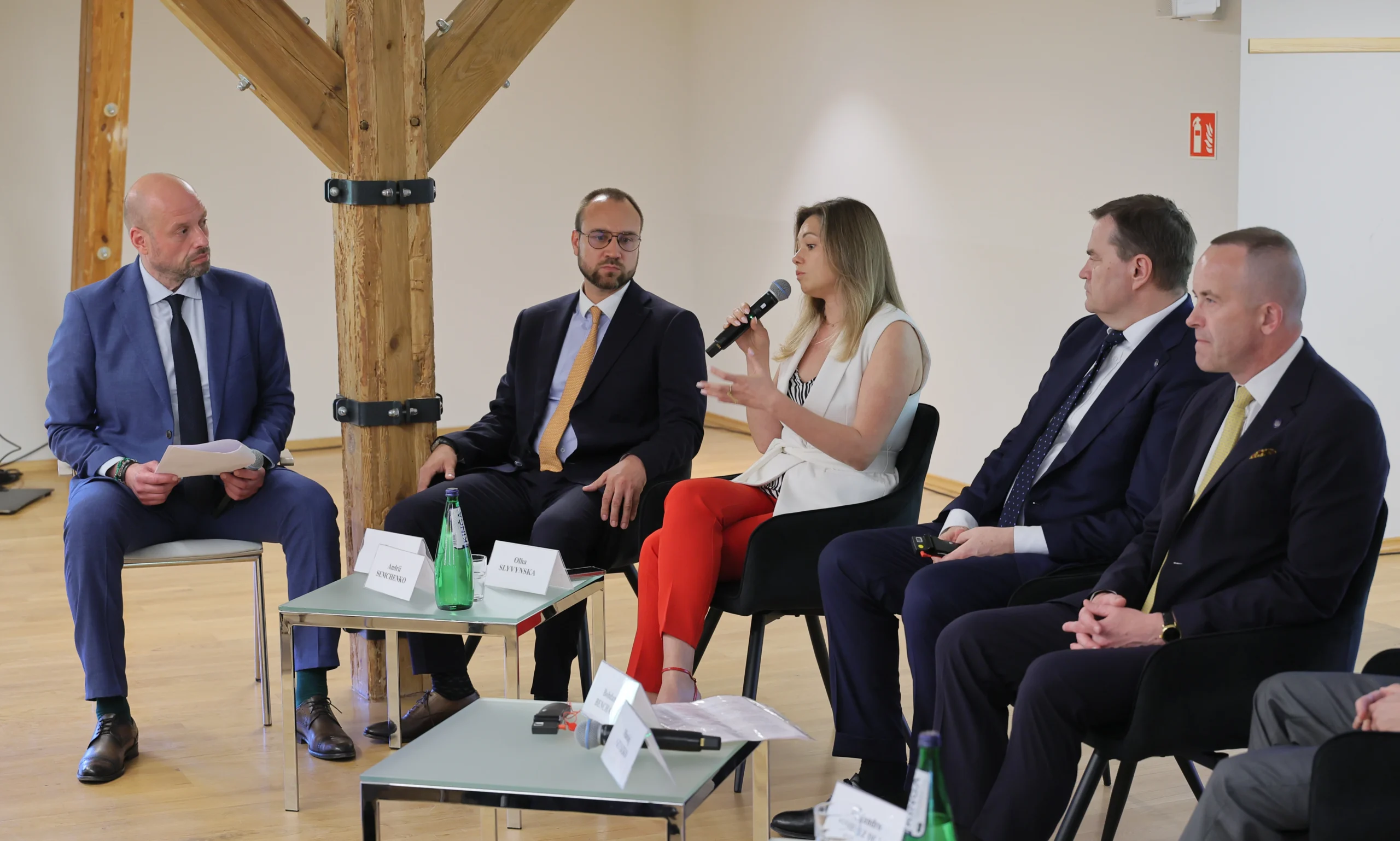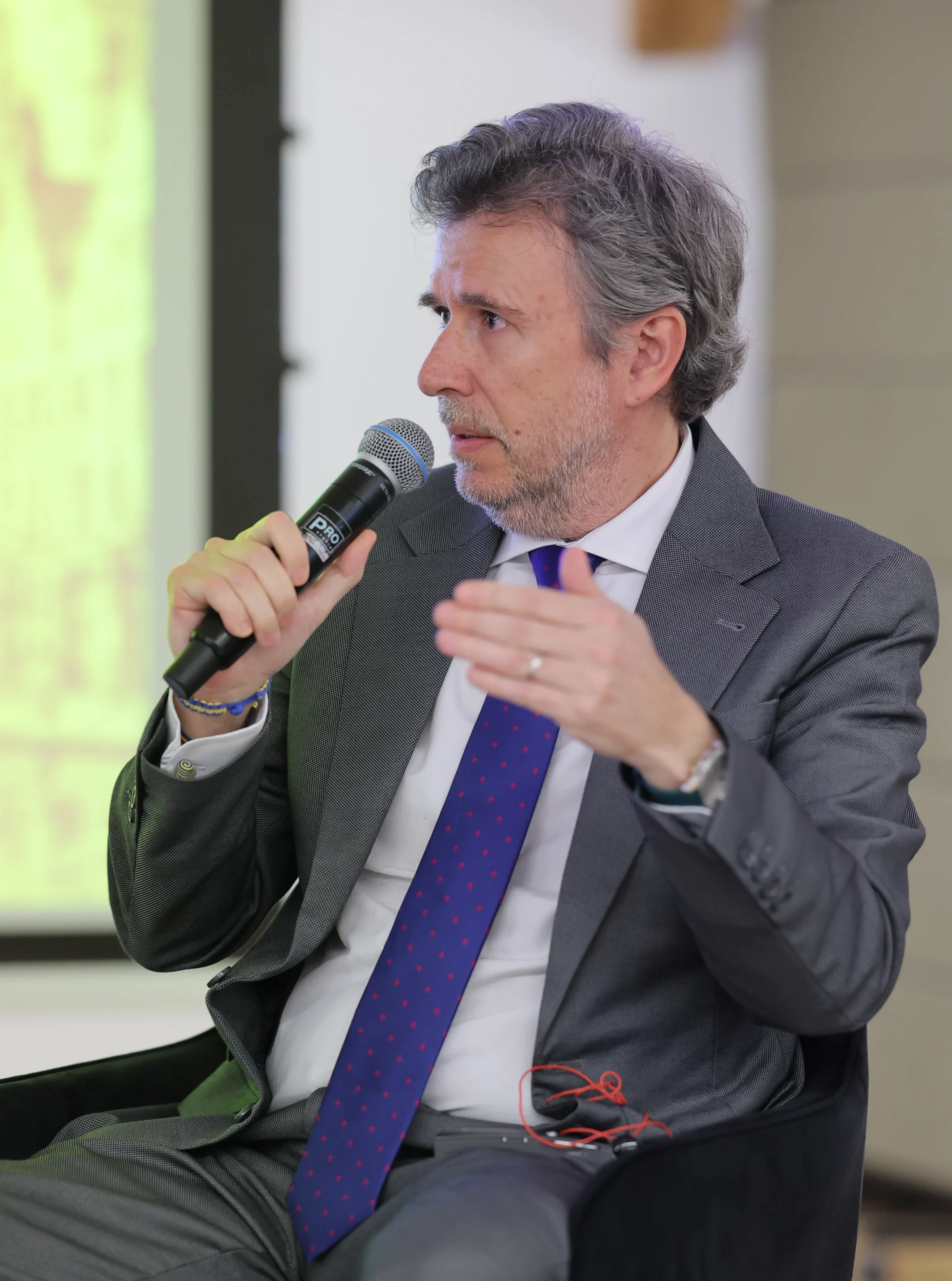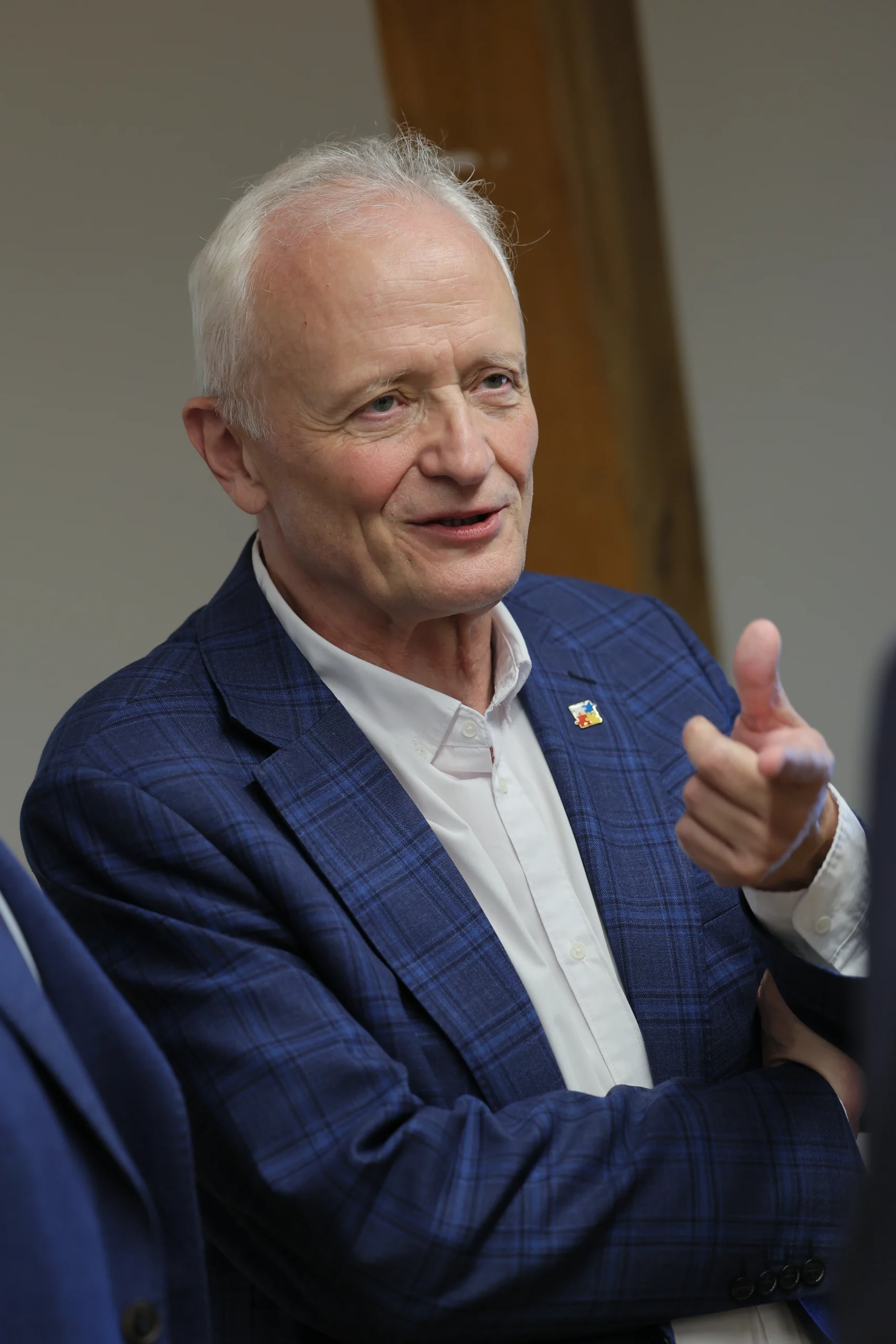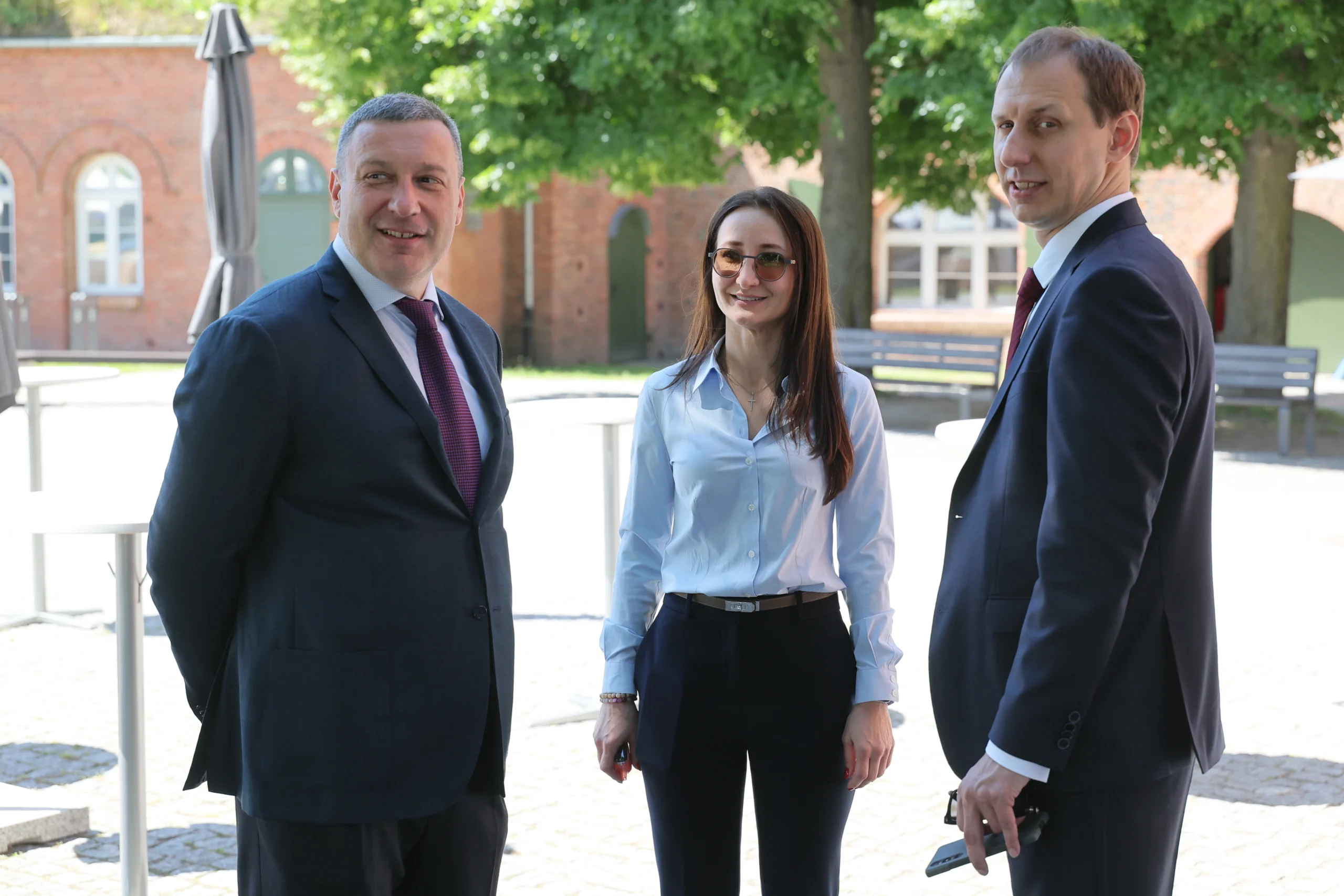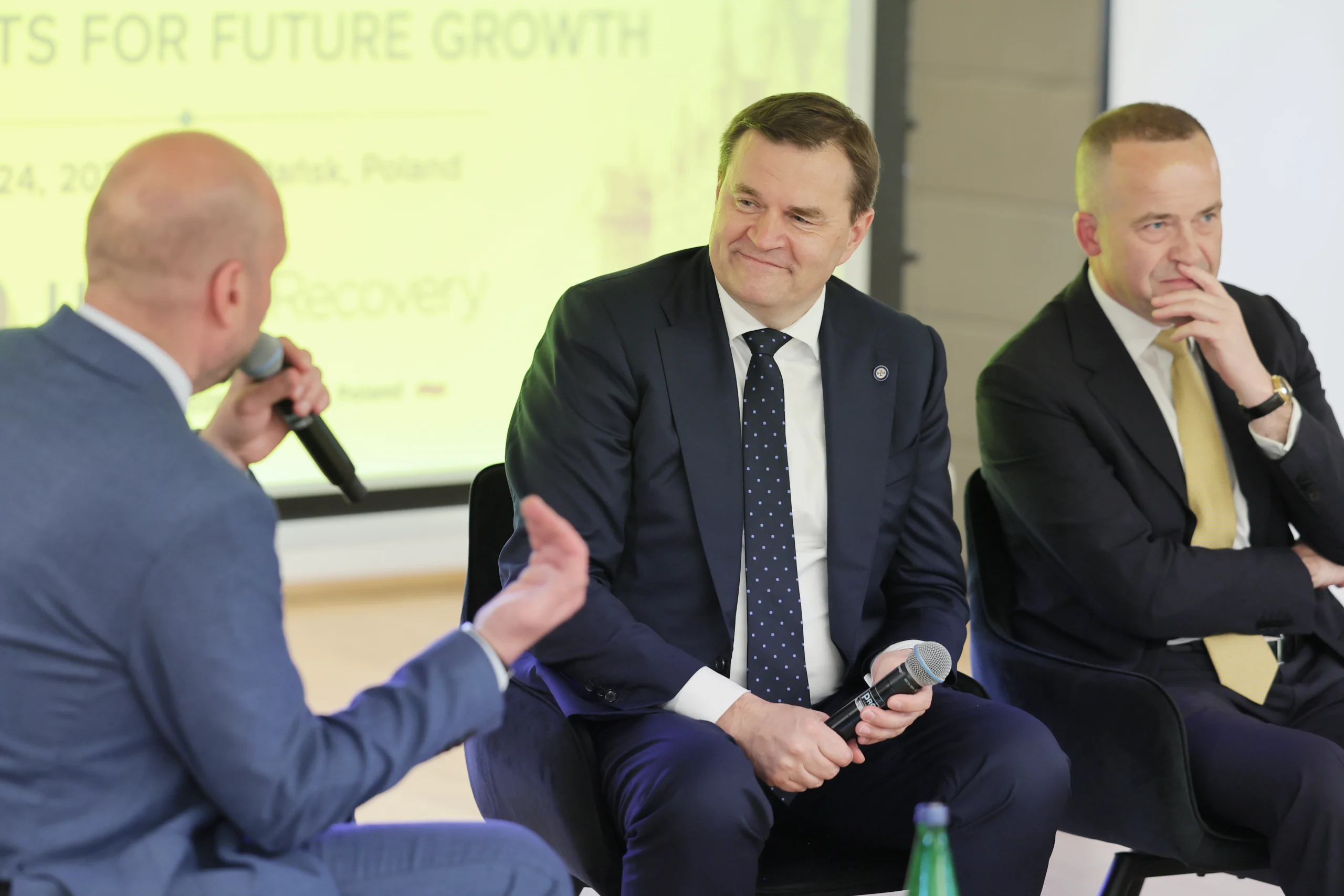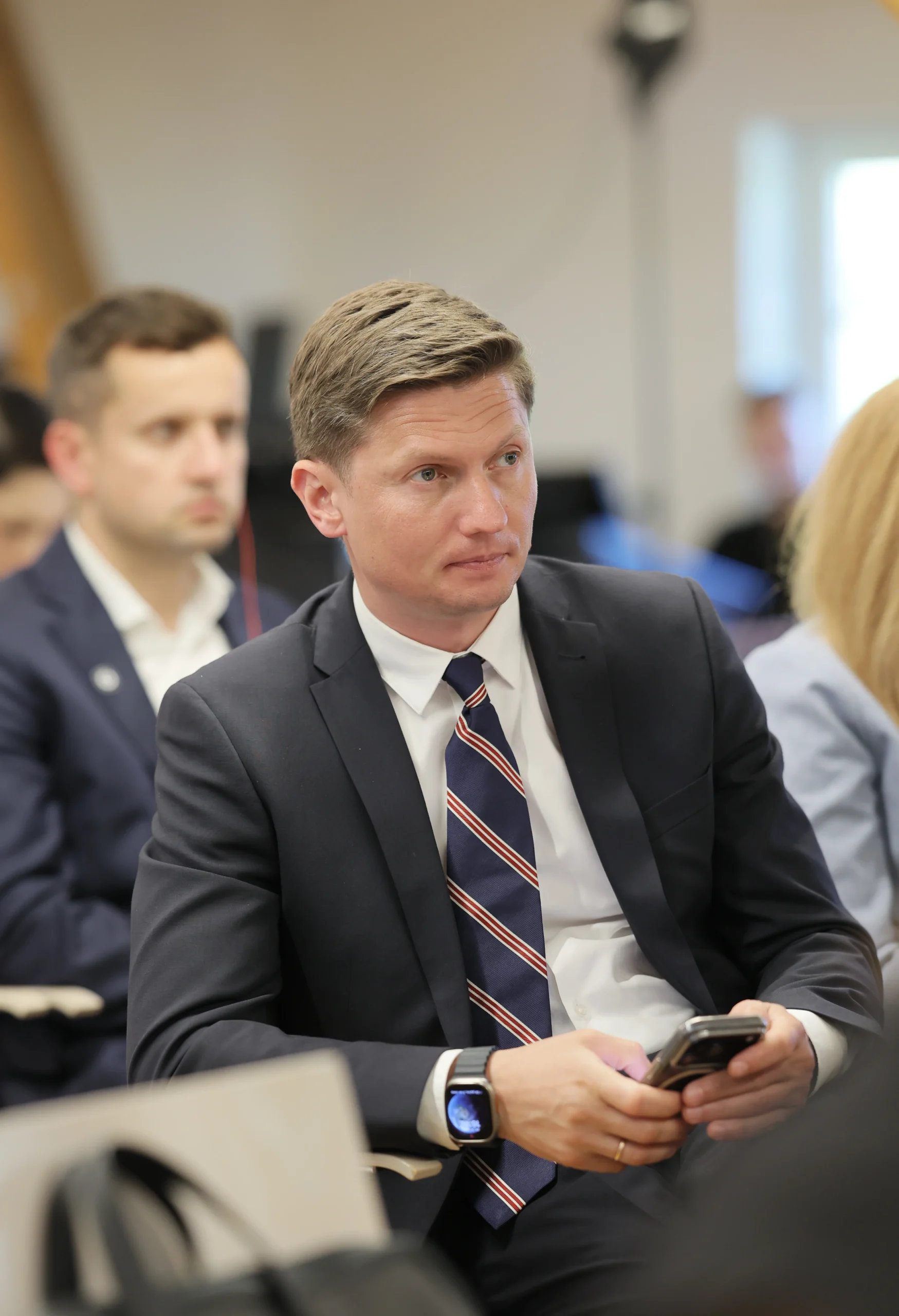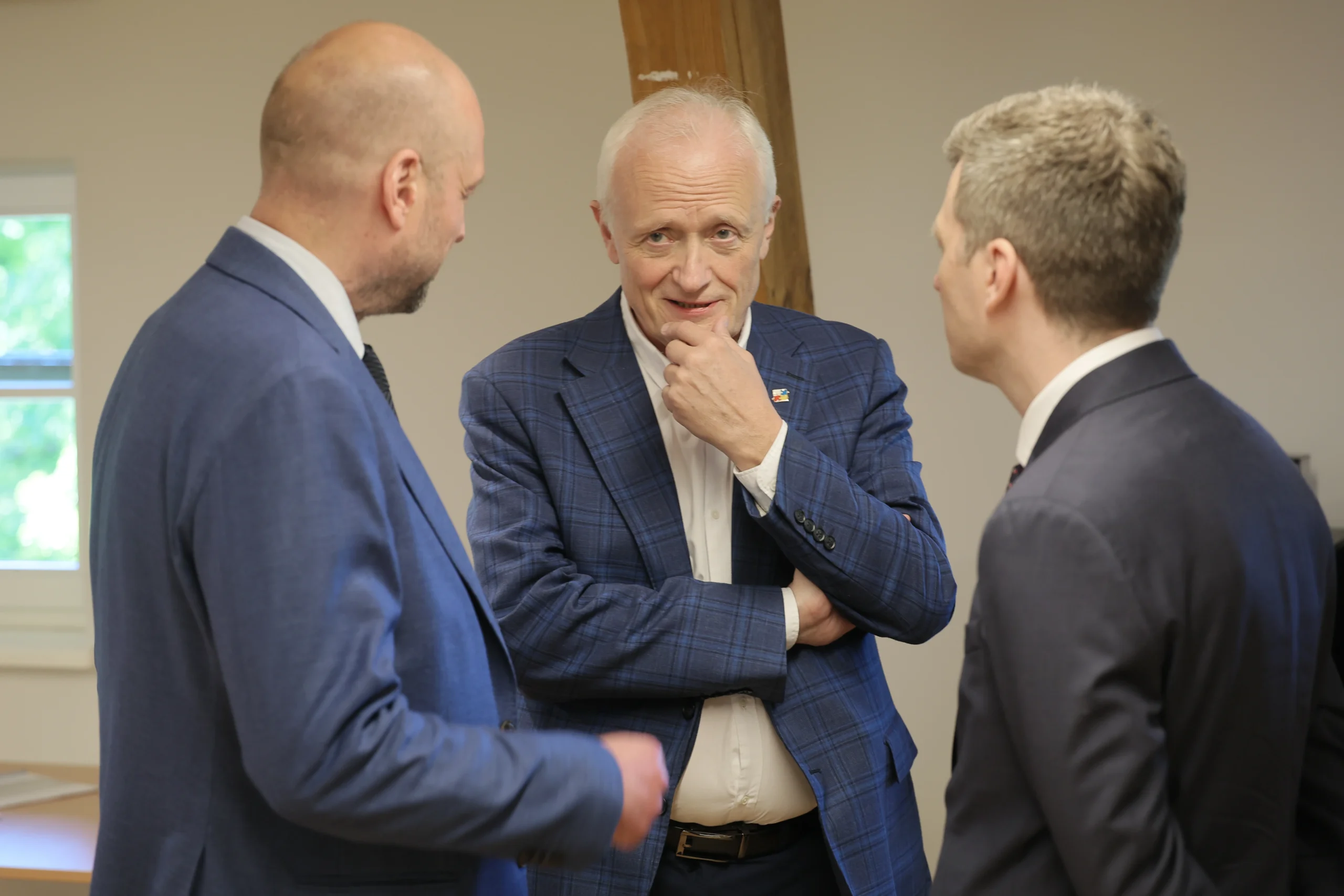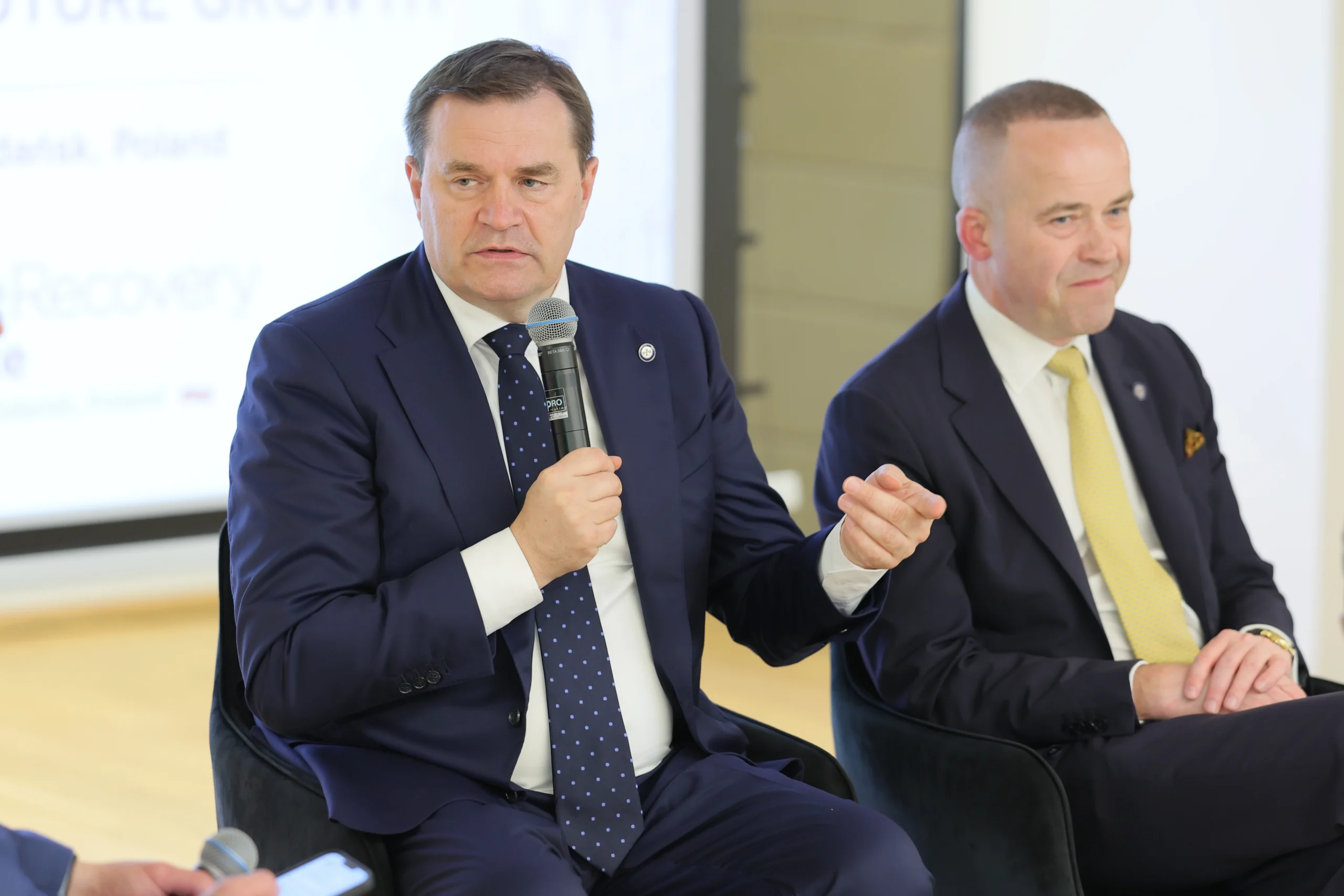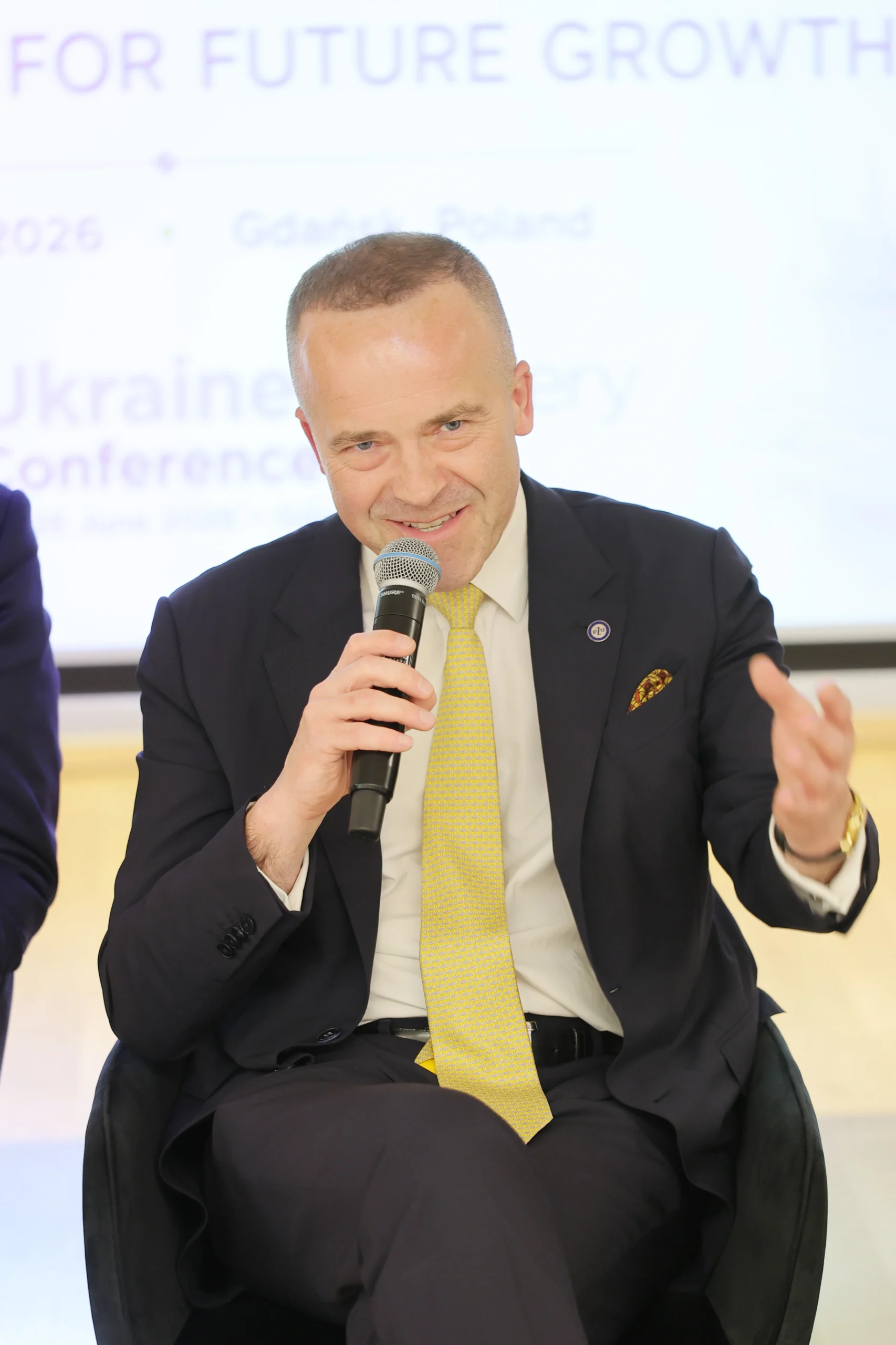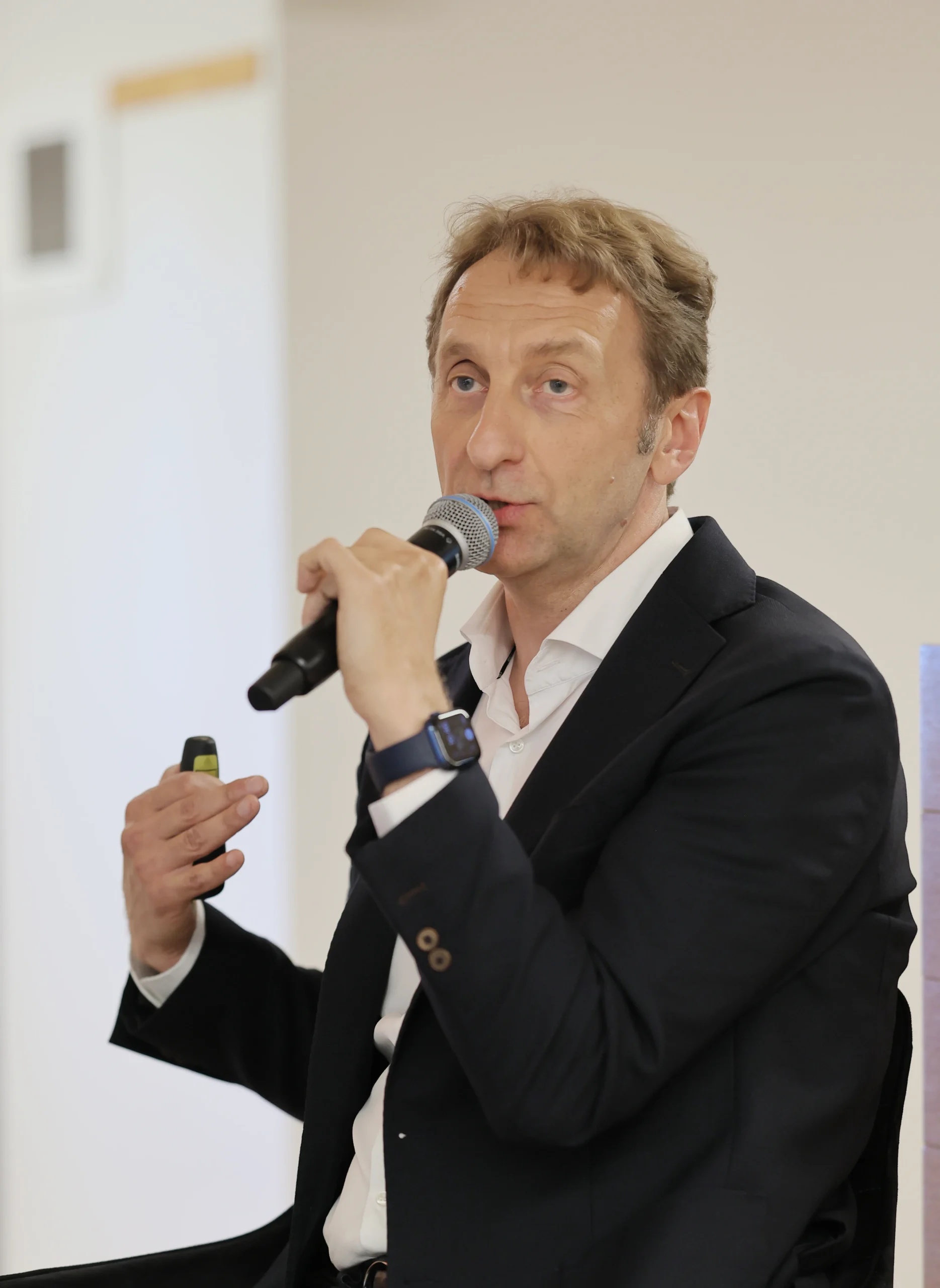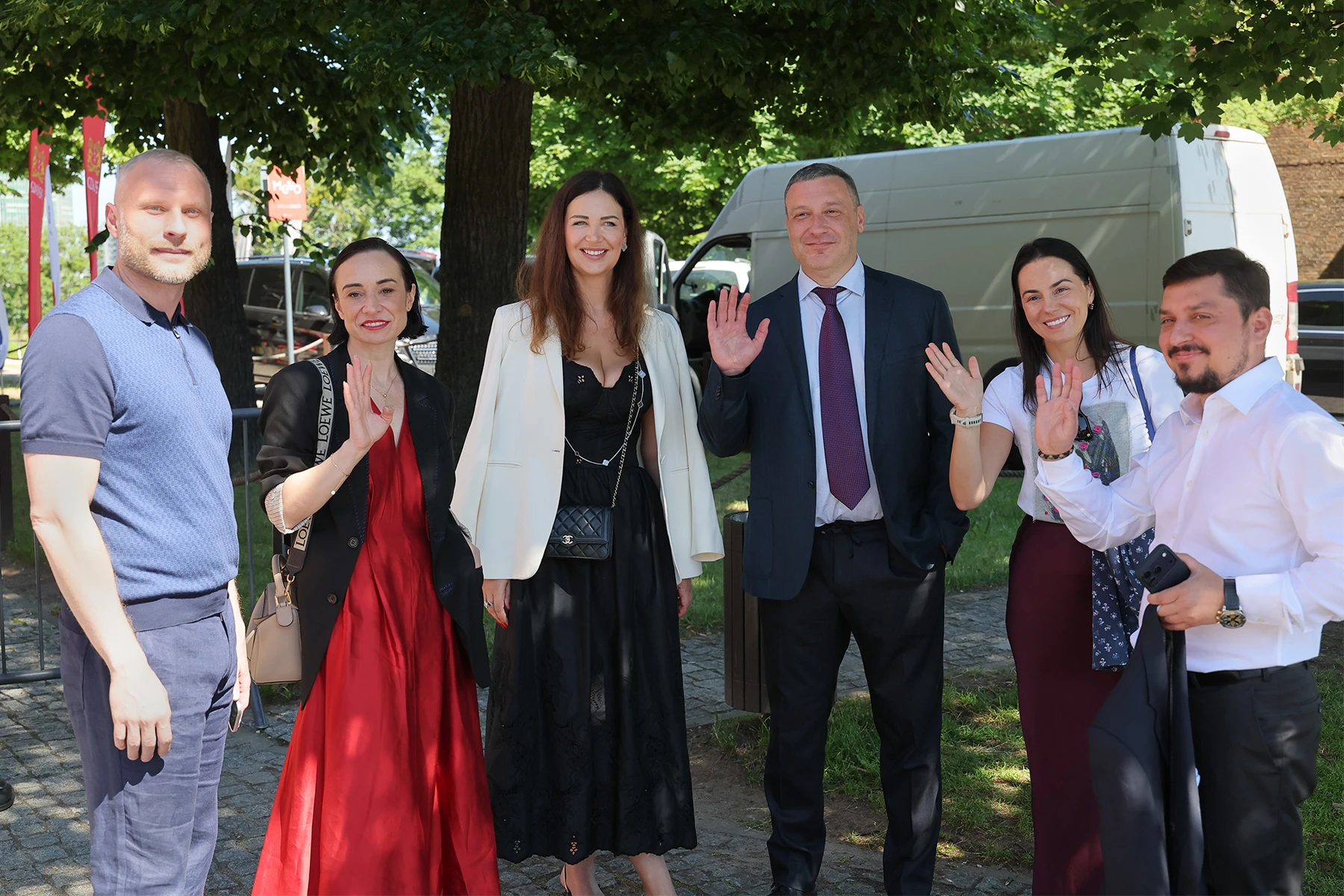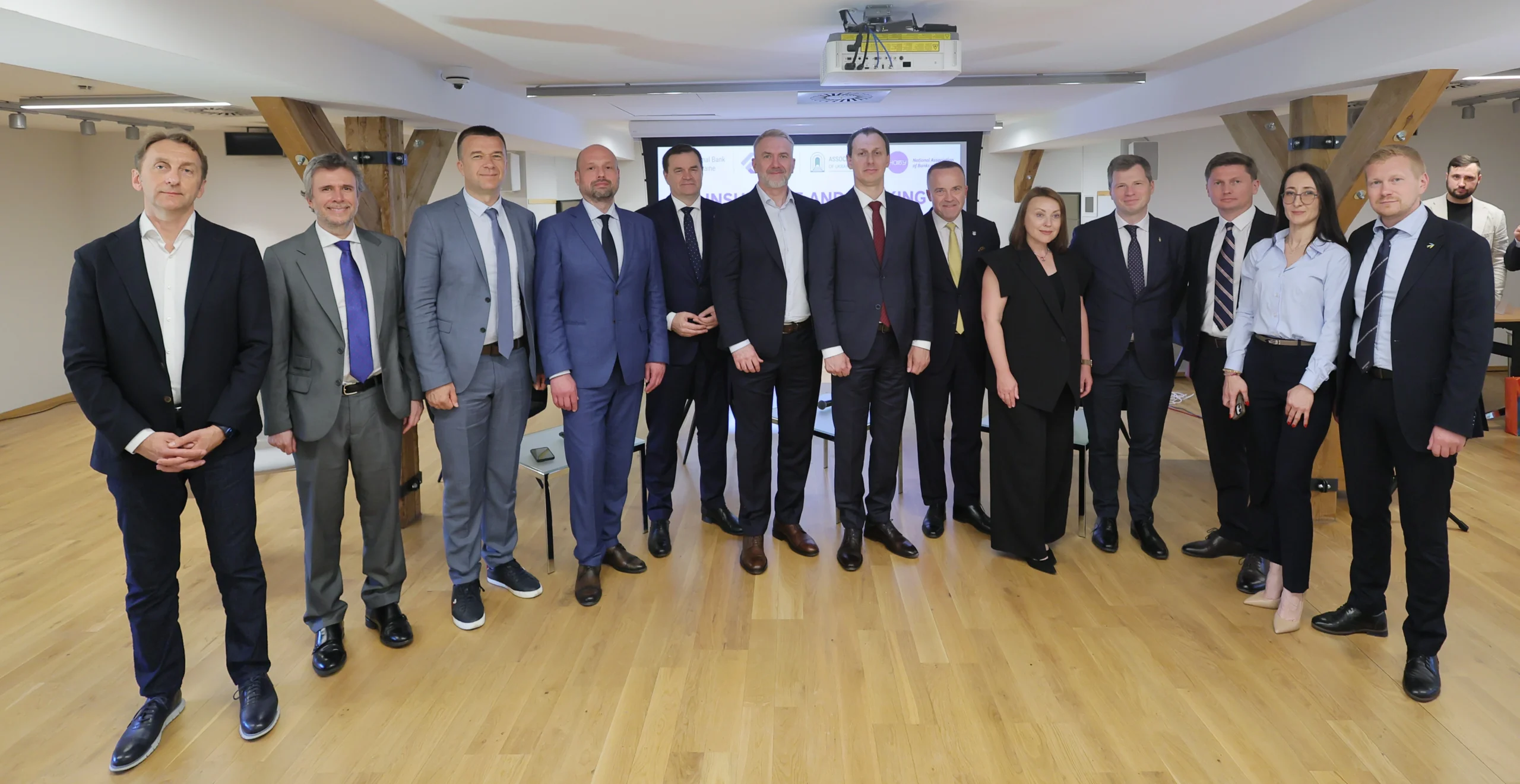
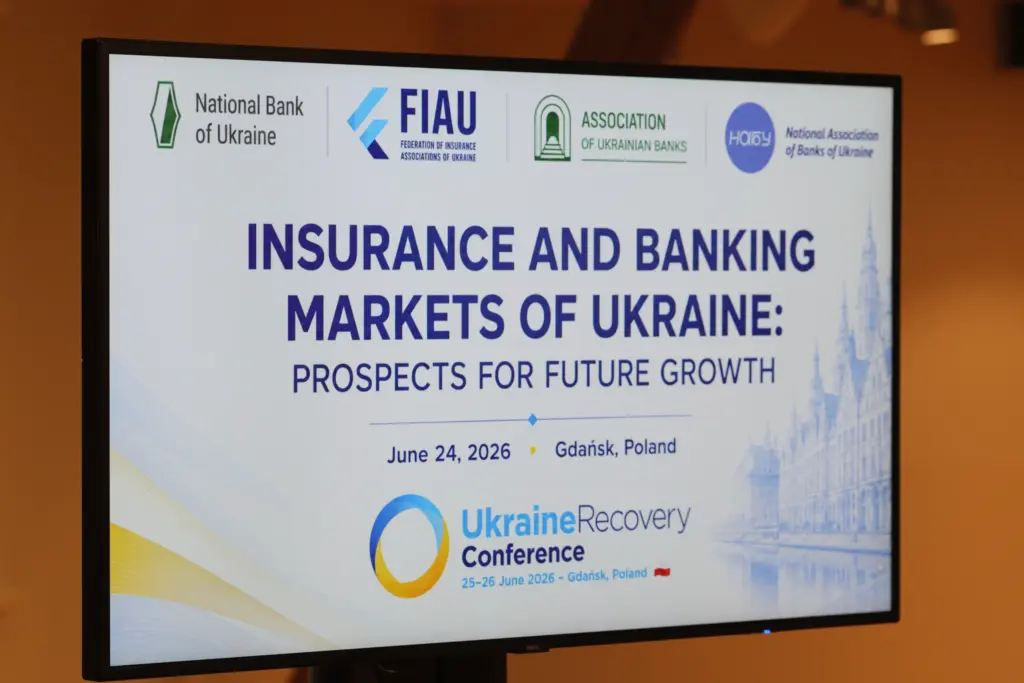
As part of #URC2026, the National Bank of Ukraine (NBU), the League of Insurance Organizations of Ukraine (LIOU), and the Federation of Insurance Associations of Ukraine (FIAU) hosted a high-level side event in Gdańsk titled “Ukraine’s Banking and Insurance Sectors: Investment, Partnership, and Economic Recovery.”
The event brought together leading representatives of Ukraine’s financial sector, international financial institutions, insurers, and policymakers to discuss the critical role of banking and insurance in Ukraine’s recovery, investment climate, and long-term economic resilience.
Among the keynote speakers were Andriy Pyshnyy, Governor of the National Bank of Ukraine; Jacek Piechota, President of the Polish-Ukrainian Chamber of Commerce; Bogdan Benchek, President of PZU S.A.; Maciej Szyszko, CEO of PZU Ukraine; Alejandro Alvarez de la Campa, IFC Regional Manager; Olha Slyvynska, Advisor to the Ministry of Economy of Ukraine; Andrii Semchenko, CEO of INGO Ukraine; Andrii Peretiazhko, CEO of ARX Ukraine; along with executives from leading Ukrainian banks and insurance companies.
“#URC2026 provides another valuable platform to showcase the latest developments in Ukraine’s banking and insurance sectors to our international partners,” said Viktor Berlin, President of the League of Insurance Organizations of Ukraine and Chairman of the Coordination Council of the Federation of Insurance Associations of Ukraine. “We discussed investment opportunities, war risk insurance mechanisms, and international cooperation, with a clear focus on the financial sector’s role in Ukraine’s economic recovery.”
Andriy Pyshnyy, Governor of the National Bank of Ukraine
Private investors understand that they are entering a country at war. And we want them to invest in a country at war. That is why effective war risk insurance is essential. Today, we see a clear understanding within the government of the importance of this issue. We decided against drafting a separate law because the market has said, “We are ready.” Our international partners have said, “We are ready.” The government has said, “We understand where subsidies are needed.” We are also seeing a growing number of applications, as well as an increasing conversion rate of those applications into issued insurance policies.
By 2027, we must align with the requirements of the European Union. This means adopting around fifty regulatory acts and ensuring, at a minimum, the implementation of three directives that will shape the future of Ukraine’s insurance market: Solvency II, the Insurance Distribution Directive, and the Motor Insurance Directive.
European regulations are not a dogma. We want our partners to view them as a smart architecture. Across the European Union, this topic is being actively discussed, and at nearly every conference I attend, I hear how important, conceptual, and strategic Mario Draghi’s report has been in defining the changes the European Union needs to make. Ukraine’s experience, Ukrainian entrepreneurs, and Ukraine’s understanding of today’s realities and risks can offer a fundamentally different perspective.
Olha Slyvynska, Advisor to the Ministry of Economy of Ukraine
The availability of effective insurance and de-risking instruments is a fundamental prerequisite for attracting private capital to Ukraine’s reconstruction and ensuring the stable operation of existing businesses.
Developing these instruments, along with the reforms and mechanisms that will enable the private sector to enter and invest in Ukraine, is our number one priority. Naturally, the development of the insurance sector—particularly war risk insurance—remains a key focus of the Ministry of Economy.
The Government of Ukraine sees its role in the insurance market as complementary. The state covers those areas, sectors (including frontline regions), and risks that the commercial insurance market is currently unable to insure on its own.
The state compensation mechanism, launched on 1 January, has already demonstrated rapidly growing demand: more than 240 companies have applied for compensation of insurance claim payments, while more than 60 companies have applied for compensation of insurance premiums.
Bogdan Benchek, President of PZU
Ukraine is a market with significant investment potential, but it also requires a responsible and well-balanced approach. Every investment decision must take into account not only business opportunities but also political, regulatory, operational, and security-related risks, as well as the country’s overall stability. That is why we view the Ukrainian market from a long-term perspective—with careful consideration and without hasty conclusions or statements. We believe that Ukraine’s recovery and development will require a strong financial sector, modern insurance solutions, and capital that will support investment, entrepreneurship, and the safety of its citizens. Poland’s experience, particularly that of PZU, can make a valuable contribution to this process.
Maciej Szyszko, Chairman of the Management Board of PZU Ukraine
For potential investors considering the Ukrainian market, it is essential that the regulatory framework be transparent, clear, and predictable. The scale and pace of future investment will largely depend on this. The experience of Central and Eastern European countries, particularly Poland, demonstrates that the development of the insurance and financial sectors has always been closely linked to effective regulation, stable public institutions, and investor confidence. Transparent rules are the foundation of a stable and competitive market.
Andrii Semchenko, Chairman of the Board of INGO
Successful war risk insurance in Ukraine is possible only with a sound underwriting model and careful management of risk accumulation and exposure.
Thanks to the high-quality claims handling provided by local insurers, the international reinsurance market—including Lloyd’s syndicates—has been increasing its capacity for Ukrainian war risks year after year.
To preserve traditional property reinsurance programmes, it is critical to prevent war-related losses from being claimed under standard property insurance policies. War-related losses should be covered exclusively by dedicated war risk insurance policies.
Alejandro Alvarez de la Campa, IFC Regional Manager
Insurance penetration in Ukraine remains very low—less than 1% of GDP—which indicates enormous growth potential for the market during the country’s reconstruction.
The insurance sector should serve as a key institutional investor and a driver of economic resilience by providing insurance coverage for the energy sector, agriculture, and SMEs.
To attract large-scale reinsurance capacity, Ukrainian insurance companies need to strengthen their corporate governance—including the appointment of independent directors—increase their capital base, and further develop comprehensive risk management frameworks covering cybersecurity, ESG, and operational risks.
Andrii Peretiazhko, Chairman of the Board of ARX Ukraine
Building a viable commercial war risk insurance market during a full-scale war is a unique Ukrainian case with no precedent in global practice over the past 40 years.
ARX’s success—as the largest insurance company in Ukraine by capital—is built on a conservative reserving policy and a target combined ratio of 95%.
Thanks to partnerships with the U.S. International Development Finance Corporation (DFC), acting as a reinsurer, and Lloyd’s syndicates, war risk coverage limits for businesses have been increased to USD 30 million.
I would like to conclude with the words of Andriy Pyshnyy, Governor of the National Bank of Ukraine:
“Where do I see Ukraine’s insurance market in five years? Today, it accounts for less than 1% of GDP. A contribution of 5–7% to Ukraine’s gross domestic product would be a very significant achievement. If we do everything right, next year will surprise everyone with the number of transactions in the market. And I am confident that we will do everything right.”